Friday, June 29, 2007

Good Morning Addis!

I am finally here. Good morning Gunfo! Good morning Addis Ababa! Good morning the best tasting coffee in the world! Good morning the biggest baked bread in the world!

Ahhhhhh! I can finally exhale; and my breathe can mix with Addis Ababa's air. It was such a struggle, making the decision to move here for a personal informal education, school (MA in Ethiopian Studies at AAU) and work. The process of convincing my family and myself at times (a two year process) that the risk (of being robbed in Merkato, dying of Malaria, receiving a poor education, being arrested by the government, having my hand eaten off by a lion, etc.) was worth my time exhausted my eagerness to come. I was falling into indifference; and how dangerous is the feeling of indifference. It wasn't until my flight to Ethiopia that my spirit was renewed. I met a white American man who was on his way back to Ethiopia. He lives here and he has been living here for 10 years. Then I met some other young Americans who were traveling to a small town near Harar, Ethiopia to teach English for 6 weeks; and I felt ashamed. I was ashamed because I was so afraid of my own country, my own people; but at the same time, I was relieved because I was finally here and descending onto the ground.

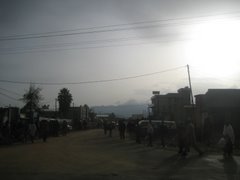
I stepped out of the airport and with every strength of my nostrils, I took in each scent, inhaling a thick perfect mixture of bad smells - car pollution, sweat, bad food, rain, sewer, and must. With every open pore on my skin, I absorbed each heavy particle from the air - dirt, pollen, carbon dioxide. The next day, I housed every image in my mind - children running eagerly alongside the car, shop owners standing still outside their shops, a group of 20 men energetically helping a man fix his just broke down car, a gush of black smoke escaping the exhaust of an ancient pick up truck, women laughing and gossiping hand in hand, the city in peace in a gray mist, about a hundred people kissing the wall and ground of a church on a Thursday afternoon, commercial billboards of beautiful girls dressed in little clothing, hungry stray dogs weakly searching for food. I stored it all in my body, mind, soul, and some on my digital camera so that you all can see! Enjoy Addis.


...more to come

Thursday, April 19, 2007

The City of Addis Ababa


Addis Ababa (translates to New Flower) is the capitol city of the third most populated country in Africa - Ethiopia. The city is blooming with new construction projects arising every day. Streets are trafficked with old Volkswagens, faded Toyota's, herds of cows and sheeps, bright blue taxi-cabs, and a few shiny black Mercedes. Buses are packed air-tight: the city's people standing shoulder-to-shoulder, drowned in each other's scent. And markets are filled with chattering shop owners eager to sell their goods. The city is the urban center of the 85% rural country.

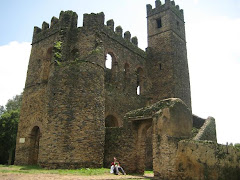
Addis Ababa was not always an urban area and moreover, it was not always the capitol city of Ethiopia. In fact, a little over one century ago, the "capitol" city was hundreds of miles north west of Addis. I put "capitol" in quotations, because in the past the capitol city did not hold as such a stable, solid political symbol as it does today. Regional governors had much political autonomy and force - most governors had armies of thousands; whereas, today the army and political power is centralized to the government in the capitol city. Back then, the political center of Ethiopia was mainly in Gondar (founded in 1636 by Fasiladas); although, at times it would temporarily relocate, reaching cities like Dabra Tabor (the center of the Yajju dynasty).

It was in the late 1800s to beginning 1900s, that the political center started its march down south. With Negus Yohannes' occupation with the Italians in the North, the Mahdist Sudanese in the West and the Egyptian/Ottomans in the East, Menilek of Shewa had the perfect opportunity to expand his influence south of the empire. So, when Yohannes died (1889) in the Battle against the Mahdist Sudanese, Menilek with few opposition rose to power.

Menilek had been expanding Ethiopia's influence to the South, which flourished with great exportable goods (i.e.coffee). So, it seemed fit to move the capitol of the empire to a new, more appropriate center. In 1881, he moved to Entotto (a little north of Addis Ababa).

Entotto had been a resting camp site for medieval kings. Menilek's palace was built here; and at times he and his wife Taytu vacationed on the southern plains were the weather was much warmer. In 1886, while Menilek was in Harar fighting the Turks, Empress Taytu migrated the royal settlement to the plains down south in what is now known as Addis Ababa. It did not officially become the capitol until 1892 with the building of the Emperor's palace, the creation of safar's around it, the building of churches (i.e. Saint George Church), and the formation of the Arada market, and finally, the completion of the French-built railway in 1917.
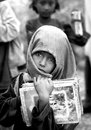
Today, Addis Ababa continues to modernize in the various definitions of modern -ization. Many from rural areas are moving to the urban lifestyle of Addis Ababa in primary search of economic relief. To compensate for the rapidly increasing population, the city continues to expand, with new neighborhoods, safar's, appearing more frequent than ever. Markets, malls, cafes, clubs, schools, and theaters are packed every day. And museums filled with precious artifacts and paintings of Emperor Menilek and Empress Taytu protect the history of the city and country.

Source: Bahru Zewde, A History of Moder Ethiopia 1855-1974. Addis Ababa University Press, Ohio University Press, James Curry. 1991

Wednesday, March 21, 2007

Music: Four Major Instruments Used in Ethiopia

Washint, Ethiopian Flute

Käbäro, Ethiopian Drum

Kirar, Five/Six-String Lyre

Masïnqo, One-String Violin


There are four faculties of music:
1. Digguwa. Yaréd’s collection of hymns for the fast of Lent.
2. Zimmaré. Hymns sung after Mass and Mäwasït are prayers for the dead.
3. Qiddassé. Includes Si’atat.
4. Sälamta. songs of praise and homage.

(Ayele Bekerie p.126-127)

Wednesday, March 07, 2007

Ethiopia's 2006 Human Rights Report Card


Released by the Bureau of Democracy, Human Rights, and Labor
March 6, 2007
RESPECT FOR HUMAN RIGHTS
Section 1 Respect for the Integrity of the Person, Including Freedom From:
a. Arbitrary or Unlawful Deprivation of Life

On January 23, federal police shot and killed 15 demonstrators and injured 19 others in the East Wallega zone, Guduru District. The shootings occurred during a demonstration by residents against local government forces. No investigation was conducted into the incident.

On February 6, off-duty federal police officer Alemu Dariba, along with other unidentified persons, killed four youths in Gondar. Dariba allegedly approached 17-year-old Berket Fantahu; 18-year-old Abebe Wondem-Agegn; 18-year-old Sentayhu Worknehand; and 19 year-old Dawit Tesfaye and ordered them to raise their hands. He then marched them to a stream 30 yards away, forced them to the ground, and shot each of them in the head. Dariba was arrested shortly after the incident and remained in custody without charge at year's end.

The Ethiopian Human Rights Council (EHRCO) reported that on May 27, in a violent conflict between local store owners in Nazret, Oromiya Region, police shot and killed Alemu Tesfaye, Tariku Yakiso, and Mensur Musema. Police had attempted to evict the store owners, and the owners and their employees responded by throwing rocks at the police. No investigation was conducted into the incident.

During the year reports were received of the August 2005 killing of Elias Molago, of Gibe District, by army troops. After Molago was killed, his body was publicly displayed in the town of Hosana, the district capital. Molago, an election observer in the 2000 parliamentary elections, had disputed the official results that gave the ruling party victory in the area. No investigation was conducted into Molago's killing.

There were no developments in the early 2005 political killings of opposition All-Ethiopia Unity Party/Coalition for Unity and Democracy (AEUP/CUD) party members Anley Adis, Eyilegne Wendimneh, Tilahun Kerebe, and Alamir Aemero. At the end of 2005 police had arrested two suspects in the killing of Tilahun Kerebe, but no further information was available.

There were no developments in the 2005 political killings by police, militia, and kebele (local administration) officials of 24 Oromo National Congress (ONC) members, including Ahmed Adem and parliamentarian-elect Tesfaye Adane. At year's end, three police officers suspected of involvement in Adane's killing were detained at Zway prison as their case remained under investigation.

There were no further developments in the 2005 political killing of CUD coordinator Hassan Endris in Amhara Region or the May killing of Sheikh Osman Haji Abdella in Oromo Region. Both killings were committed by kebele officials.

b. Disappearance
The politically motivated disappearances of tens of thousands of civilian protestors following the November 2005 political demonstrations persisted into the current reporting period. The independent commission of inquiry into the alleged use of force by security forces in June and November 2005 found that security officials held over 30,000 civilians incommunicado for up to three months in detention centers located in remote areas following the November 2005 demonstrations. Other estimates placed the number of such detainees at over 50,000. By year's end, all but a few hundred of these prisoners were released and those who remained in custody currently were facing trial.

In January EHRCO reported the December 2005 disappearances of six persons. On December 2, security forces abducted Lt. Abebe Alemu of Lafto Subcity, Addis Ababa; Heletework Zewdu of Akaki Subcity, Addis Ababa; and Wondimagegene Gedefaw of Kolfe Subcity, Addis Ababa. On December 21 and 22, security forces abducted Tadesse Zelelam, Ayana Chindessa, and Legesse Tolera at Nekemt High School in Nekemt, Oromiya region.

There were no developments in the June 2005 abduction by security forces of Addis Ababa residents Ashenafi Berhanu, Tsegaye Neguse, Daniel Worku, Adem Hussien, Jelalu Temam, Girum Seifu, Mekonnen Seifu, Endeshaw Terefe, Daniel Abera, Tesfaye Bacha, Tesfaye Jemena, Bonsa Beyene, Getu Begi, Solomon Bekele, Amanuel Asrat, Mesfin Mergia, or Dawit Demerew. The whereabouts of these individuals remained unknown.

There were no new developments in the May detention of Jigsa Soressa, a guard at the Mecha and Tulema Association (MTA), an Oromo Non-governmental organization (NGO), who reportedly continued to be detained at Addis Ababa prison.


To read the full report, click on this blog title.

Monday, February 19, 2007

The Beginnings of Dire Dawa: Compagnie Impériale des Chemins de Fer Éthiopiens

March 9, 1894 - Emperor Menelik II gave royal permission to his Swiss advisor Alfred Ilg and a french semi-private company to build a railway between the capitol Addis Ababa and the French port city in Djibouti. A 99 year lease was given to Sir Alfred Ilg and the French firm.

1897 - Permission and support was given by French authorities. British initially showed opposition, because they did not want to lose business at their port in British Somaliland.
October 1897 - Construction began in Djibouti. Somali and Arabs worked mostly as laborers, Ethiopians as security force, Europeans as overseers.

Before the construction reached Ethiopia, there were serious financial problems. So, the British New Africa Company took over the project.
1901 - the British joined the French and formed the International Ethiopian Railway Trust and Construction Company
July 1901 - The first commercial train service from Djibouti to desert area near Harar

1902 - Dire Dawa was founded

Coordinates: latitude and longitude of 9°35′N 41°52′E
Relative Size: 2nd largest city in Ethiopia
Economy: A commercial and industrial center located around the railroad and on the Dechatu River
Manufactures: processed meat, vegetable oil, textiles, cement
Population: 398,000 (2005)
Ethnic groups: 48% Oromo, 27.7% Amhara, 13.9% Somali, 4.5% Gurage, 5.9% other.
Religion: 63.2% Muslim, 34.5% Orthodox Christian, 1.5% Protestant, 0.7% Catholic, 0.1% other

1902 - Menelik suspicious of French and British intentions forbid the expansion of the railway to Addis Ababa
1904 - The french and Ethiopia signed a friendly agreement to open discussion on continuing the project. However, no agreement was made.
1906 - The French-British construction company went bankrupt.
1908 - Funds moved to a new company to complete construction: Compagnie de Chemin de Fer Franco-Ethiopien de Jibuti à Addis Abeba
1909 - Construction began
1915 - Railway line reached Akaki, which is 23 kilometers from Addis
1917
- The Railway made it to Addis Ababa
1936 - Italians seized the railway during their occupation of Ethiopia
1945 - Ethiopia regained the railway
1977 - Djibouti gained independence and gained control of the French share of the railway
1977-1978 - Ogaden War - destruction of parts of railway
June 2002 - OLF bombed Railway headquarters in Dire Dawa

2003- European Commission granted Ethiopia 40 million euros to reconstruct damaged areas of railway
2006 - European Commission granted an additional 10 million euros
March 2006 - Ethiopia and Djibouti Ministry of Transport chose South African company Comazar to head the project.
November 29, 2006 - Ethiopia and Djibouti government signed an agreement to begin work on the line in 2007.
The capacity of the railway will increase from what it is today 240,000 tons to 1.5 million tons.

Source: Wikipedia

Wednesday, February 07, 2007

Over 60 Volcanoes in Ethiopia


We all remember Adwa in historical terms - the battle of Adwa (1896) was one of the greatest military victories for Ethiopia. Adwa, in geological terms, is a stratovolcano - "A stratovolcano is a tall, conical volcano composed of many layers of hardened lava, tephra, and volcanic ash. These volcanoes are characterised by a steep profile and periodic, explosive eruptions. The lava that flows from them is highly viscous, and cools and hardens before spreading very far (Wikipedia)."

Here is more data on the Adwa Volcano provided by the Smithsonian Institution's Global Volcanism Program:


Volcano Number: 0201-17=
Volcano Status: Holocene
Last Known Eruption: Unknown
Summit Elevation: 1733 m 5,686 feet
Latitude: 10.070°N 10°4'12"N
Longitude: 40.840°E 40°50'24"E


It's important for us to be educated about every aspect of the country Ethiopia including politics, culture, government, religion, history, language, literature, population, health, education, art, geography, and much more. All have a degree of relation to one another and to the whole Ethiopia. There are over 60 volcanoes in Ethiopia; it is the most volcano saturated country in East Africa and all of Africa. Click on the title to learn about the other volcanoes in Ethiopia.